Say the word PrEP in Germany and a fairly specific picture forms. Gay men, big city, scene. That's what the campaigns look like, that's how the first big trials were designed and that's what most practices are set up for.
Women barely appear in that picture. They do appear in the infection figures.
What the numbers show
In 2024 Germany recorded 3,259 confirmed new HIV diagnoses. A good quarter of them were women. Among the roughly 590 infections passed on through heterosexual sex that year, six in ten were women.
Set against that: around 40,000 people in Germany take PrEP, and almost all of them are men.
That gap has very little to do with who could use the protection. It has a lot to do with who hears about it.
Why PrEP reads as a men's thing
Pre-exposure prophylaxis was first studied and promoted where the epidemic in Germany is most visible. That made clinical sense and it came with a side effect: almost everything communicated about PrEP still speaks to queer spaces.
Then there's the care itself. HIV prevention rarely comes up on its own in a gynaecology appointment. Women get asked about their sex lives less often, about the number and status of their partners less often, about practices less often. If nobody asks, most people don't volunteer it. And if you never hear that a pill exists which stops HIV, you don't go asking for one.
Professional bodies now say this openly and tell clinicians to check their own bias. Getting that into every consulting room will take a while.
What works differently for women
Brief detour into the medical side, because this part genuinely matters.
The active ingredient in PrEP doesn't build up evenly across body tissues. In rectal tissue the concentration climbs fast and high. In vaginal and cervical tissue it rises more slowly and stays lower. Two things follow from that.
Protection takes longer to build. With anal sex, daily PrEP is working from day three. With vaginal sex you can count on full protection from day seven. Condoms cover that first week.
There's no on-demand version. The event-based schedule, two pills beforehand and one on each of the two following days, isn't suitable for vaginal sex. The evidence doesn't support it and only continuous use is licensed anyway. For you that means daily, every day, including the weeks with no sex in them.
This difference also explains why the early trials in women looked so discouraging. When the blood samples were analysed afterwards, hardly any of the drug showed up in a lot of participants. Where the pills were actually taken, they worked reliably.
Who gets it covered in Germany
Statutory health insurance has covered PrEP since September 2019 for anyone aged 16 and over with a substantial HIV risk. The agreement lists four constellations and three of them can apply to women:
- a relationship with someone living with HIV whose viral load isn't stably undetectable or whose treatment has only just started
- injecting drug use without reliable access to sterile equipment
- sex without condoms with partners from regions where HIV is common, or in situations with a raised chance of transmission
That last point is assessed individually by a clinician and it's deliberately broad. Which is exactly why it pays to be specific in the appointment. Describing what your sex life actually looks like gets you a lot further than a general question.
One more thing worth knowing: only clinicians with the relevant qualification are allowed to prescribe it. A no from the first practice you try says nothing about you or your risk.
What PrEP doesn't cover
PrEP protects against HIV. It does that very well and that's the whole job.
It isn't contraception. Your pill, ring, implant or coil carries on exactly as before, because there's no meaningful interaction between PrEP and hormonal contraception.
It also doesn't protect against other sexually transmitted infections. Chlamydia, gonorrhoea and syphilis are entirely indifferent to whether you're on PrEP. Regular testing stays part of the package, everywhere you have sex.
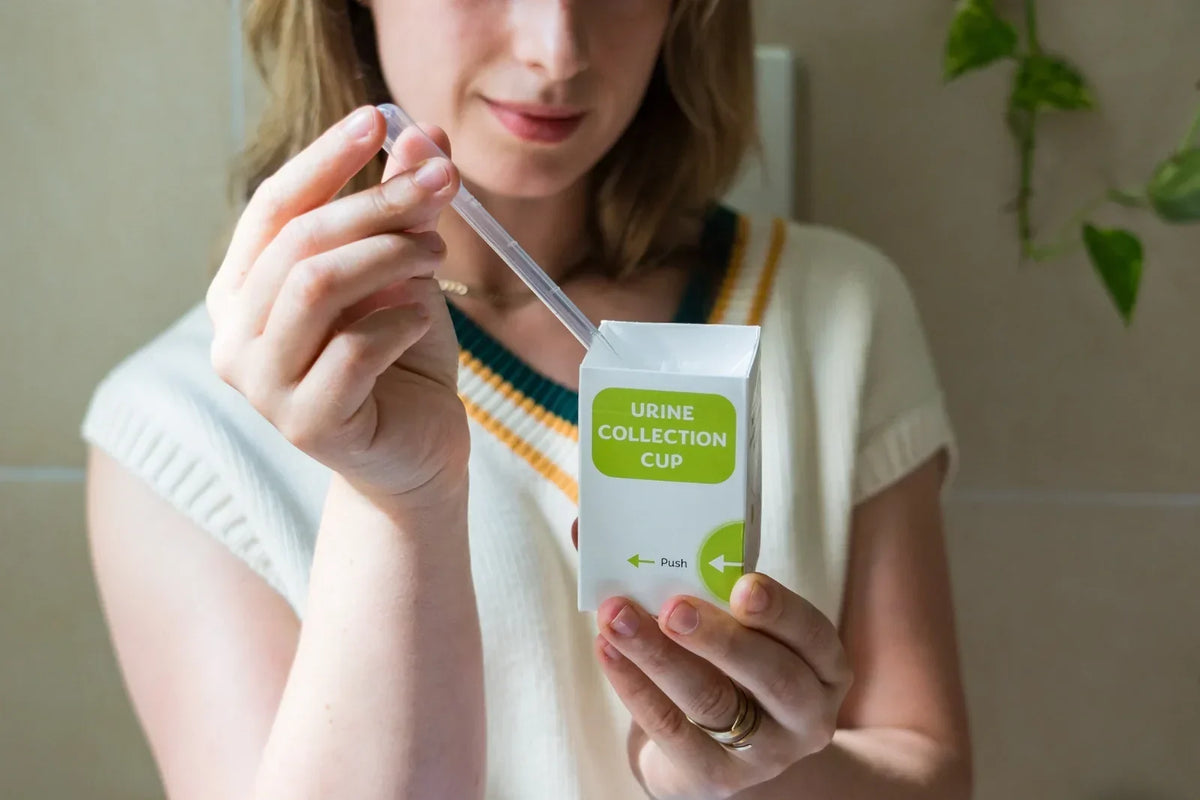
Once you're on PrEP, those tests run through the practice prescribing it and are a fixed part of your check-ups there. While you're not on PrEP yet, or whenever you want clarity in between, Reality Check covers the relevant pathogens from home.
Pregnancy, breastfeeding, hormones
Three questions come up constantly, so here they are.
Pregnancy. Current guidance explicitly recommends staying on PrEP where the HIV risk continues. Earlier concerns haven't held up. Pregnancy is also a point where an HIV infection carries particular consequences, since the virus can be passed to the baby.
Breastfeeding. Same recommendation: keep the protection going while the risk is there.
Gender-affirming hormone therapy. For trans women and trans men there are no relevant interactions between PrEP and hormone therapy. Hormone levels stay where they should be and so does the protection.
What comes with starting
Before you start there's an HIV test, a check of your kidney function and a look at your hepatitis B status. After that you come back every three months for an HIV test, with kidney values and STI screens at set intervals. All of that runs through the practice prescribing your PrEP.
Those appointments are quick and they're the best opportunity going to get everything else checked at the same time. Plenty of people end up with their first real routine for sexual health because they started PrEP.
What's arriving now
The daily pill is no longer the only option.
There's an injection given every two months. In a large trial with women in southern Africa it clearly outperformed daily pills, mostly because it takes the whole question of remembering out of everyday life.
Since 2025 the EU has also licensed a version injected just twice a year. In its approval trial with more than 2,000 young women in South Africa and Uganda, not a single HIV infection occurred in that group.
In Germany both options are still hard to get hold of in practice and funding is often unresolved. It's still worth raising in the appointment, especially if daily pills realistically don't work for you.
A vaginal ring used in several African countries hasn't been licensed in the EU so far.
How to start the conversation
Don't wait to be asked. The most effective sentence is the direct one: "I'd like to talk about PrEP."
There are more places to go than most people assume. Infectious disease practices, checkpoints in larger cities, some public health offices. Deutsche Aidshilfe can point you to somewhere nearby and will advise anonymously if you prefer.
If a practice leaves you feeling like the topic isn't being taken seriously, that's on the practice. Get a second opinion.
We're working on an HIV prevention service ourselves. If you want to know when it's ready, put your name on the waiting list.
The protection is yours too
PrEP wasn't invented with women in mind. It works anyway, it's available and with the right criteria met, insurance pays for it.
If your life contains a situation where HIV is a factor, PrEP is an option for you. Whoever happens to be on the poster.