




Prevention against sexually transmitted infections
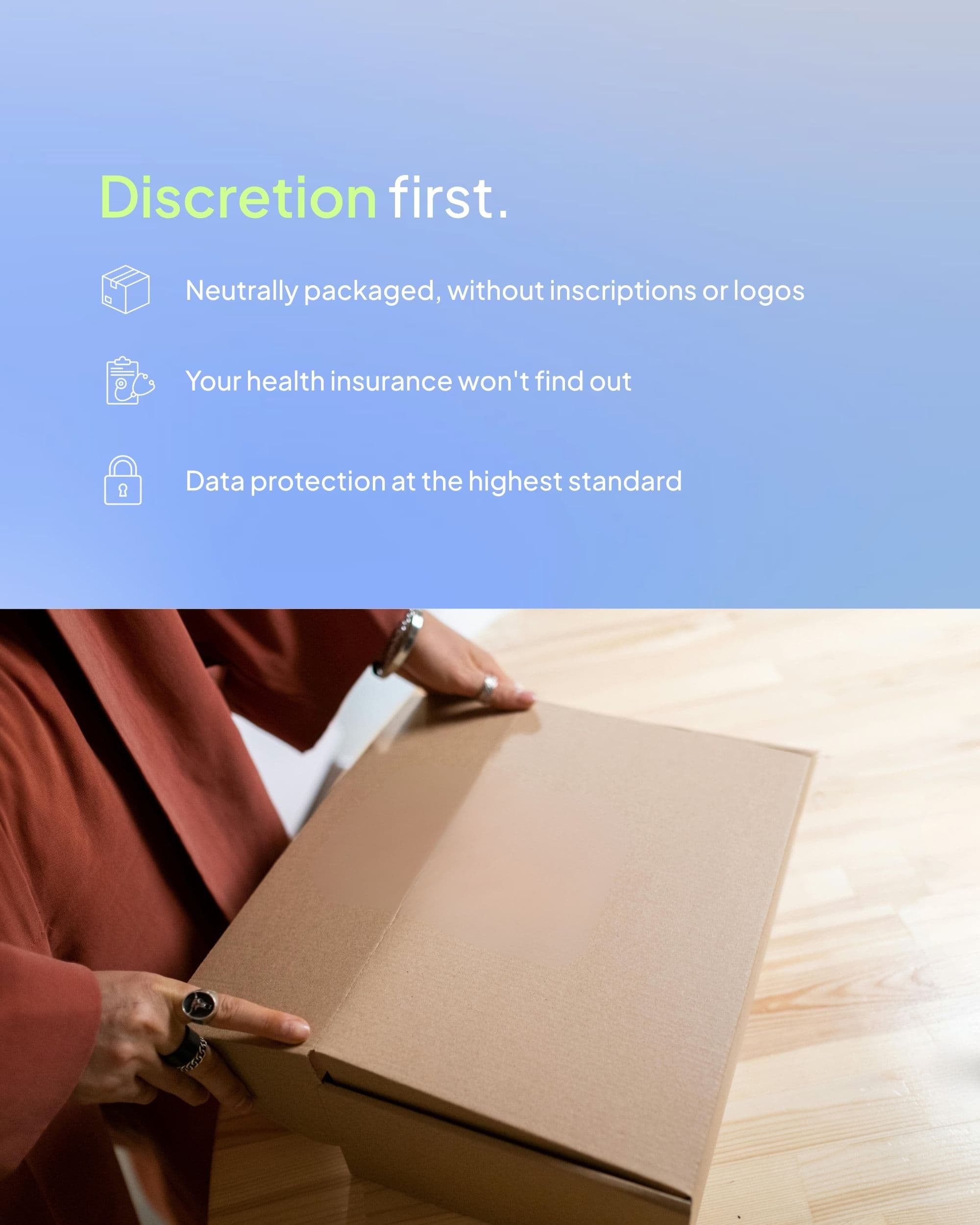
- [[[Free and discreet]]] delivery of your medication or alternative prevention method
- Online medical review with a [[[personal treatment recommendation]]] the same day
- Ongoing care from leading partner physicians in infectious disease
Protect yourself against

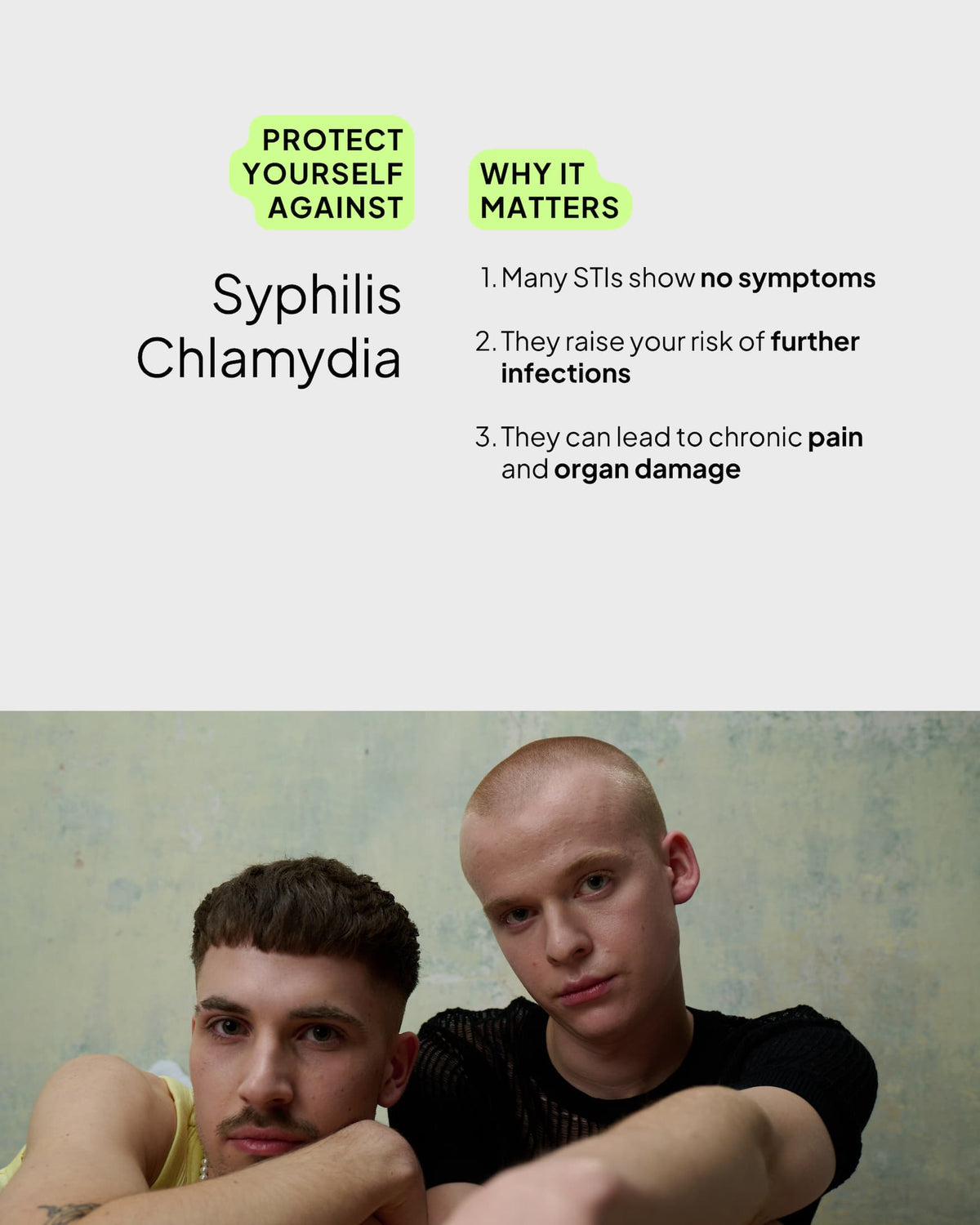
Infections often show no symptoms
Every day, more than 1 million people worldwide get an STI
Chlamydia is a bacterial infection of the mucous membranes, caused by the bacterium Chlamydia trachomatis. It mainly causes inflammation of the urethra, the genital tract and the rectum.
When symptoms do appear, they show up one to three weeks later as discharge from the urethra or vagina, along with itching, burning and pain when urinating.
Left untreated, chlamydia can lead to pelvic inflammatory disease, inflammation of the prostate, testicles and epididymis, and infertility. In women, inflammation can cause the inner lining of the fallopian tubes to stick together, making it impossible for the egg to travel.
Syphilis is a bacterial infection caused by the bacterium Treponema pallidum. It typically progresses in several stages and, if left untreated, can affect various organ systems including the skin, mucous membranes, lymph nodes, the cardiovascular system and the nervous system.
Syphilis progresses in stages, which is why it often goes unrecognized at first. In the first stage there is usually a painless sore (ulcer) at the site of infection, for example on the genitals, in the mouth or in the anus, which then disappears on its own. Weeks later, flu like symptoms, a skin rash or swollen lymph nodes can appear. Because the symptoms are mild and unspecific, they are often overlooked or mistaken for other conditions.
If syphilis goes untreated, it can go on to cause serious damage to vital organs such as the heart, blood vessels and brain, with permanent consequences and, in some cases, death. The good news: in the early stages, syphilis can be cured reliably and completely with antibiotics.
How it works

1. Medical history
We look at what kind of protection makes sense in your case and what you'd prefer (for example post exposure prophylaxis or condoms). Just answer our online questionnaire about your needs and your medical history.

2. Medical review
Our partner physicians assess whether you're suitable for treatment and which protective measures fit. They'll give you your treatment recommendation, including a prescription if it's clinically indicated.

3. Delivery
If you're prescribed a medication, one of our partner pharmacies ships it by the next business day at the latest, or you pick it up at a pharmacy of your choice.

4. Support
We've got you. Our team and our partner physicians are here for you with fast support whenever you need it, no waiting weeks for an appointment.
Goodbye STI worries. Hello healthy sex life.

Clinically proven effect
Clinical studies demonstrate the high efficacy of medication based STI risk reduction. The incidence of bacterial STIs such as chlamydia and syphilis drops significantly among people who use this method. (Source: San Francisco Sexual Health Clinic; Scott H et al, CROI 2024)

Medication based STI prevention
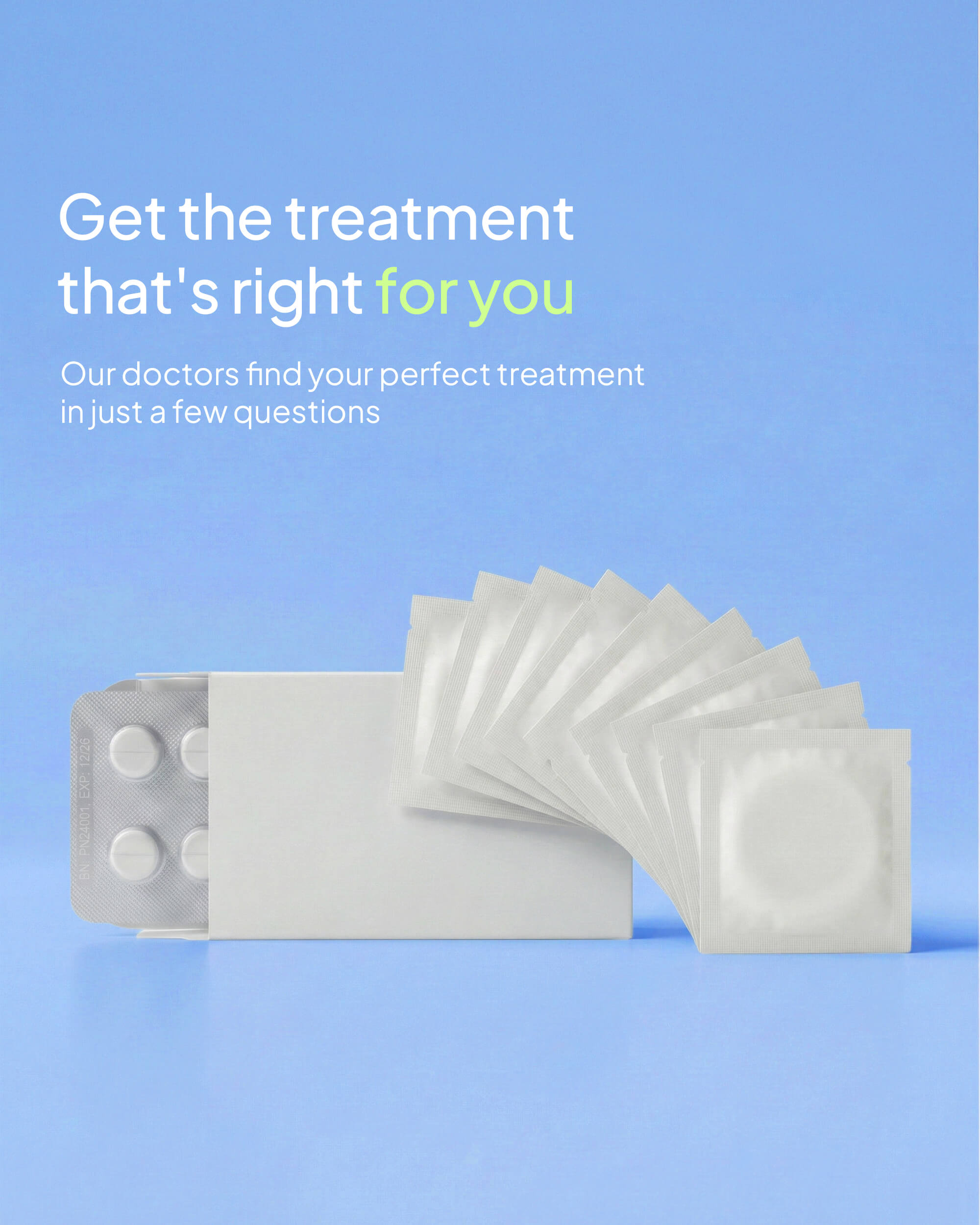
Condoms work. They're just not everyone's first choice. Certain medications can be an effective alternative or an added layer of protection. They can substantially lower the risk of getting chlamydia and syphilis, and to a lesser extent gonorrhea.

Post exposure prophylaxis
Where clinically indicated, a physician can prescribe a specific antibiotic that's taken once after sex. Taken within 72 hours of sex, it can substantially lower the likelihood of contracting chlamydia and syphilis.

For people at high risk
According to clinical studies, it works for people (AMAB) who have condomless sex with men (AMAB). Condomless sex means a condom isn't used most of the time. That can apply to any kind of sex: oral, anal and vaginal or front hole sex.
Loved by you,
backed by [[science]]
What our users say about us
Loved by you,
backed by [[science]]
What our users say about us

Rico, 33
I had chlamydia two months in a row and I was completely done with it. Six months on Plan D now and [[[not a single STI since]]].

Chris, 32
A friend told me about it and I wanted to try it myself. Alongside PrEP, Plan D is a real game changer for me. That's what I call [[[quality of life]]]!

Lukas, 26
It's good to have a [[[sense of safety]]] when I'm out and having fun. Contact with the team has always been spot on, every question answered quickly.

Tim, 36
No stress, it all runs by itself. I did sleep through a check in once, but Paul kindly reminded me. Thanks! This is [[[what healthcare should look like]]]!

Jan, 42
Since starting HIV PrEP I can finally enjoy my love life the way I couldn't for a long time. With Plan D I now have [[[extra protection]]] on top. Love it!
ℹ These reviews have been verified by us.
Dirty talk
STIs, how it works, staying discreet? Ask us anything.

Statutory health insurers don't cover the cost of medical treatment or of any medication or condoms. For now, insured members have to cover these costs themselves.
If the medical review finds that the treatment you want isn't clinically suitable for you, we'll of course refund the full amount you paid within 10 business days.
Under the German Medicines Advertising Act (Heilmittelwerbegesetz), we're not allowed to name medications or active ingredients on the website. Once a partner physician has assessed your suitability for the treatment you want, you'll be told the name of the medication if it's relevant. Our medical expertise is available to you throughout the whole process to answer any questions you have.
For chlamydia and syphilis, no resistance to the standard therapies has been observed despite many years of use.
With gonorrhea it's different: resistance is already high, which is why the antibiotic used for prophylaxis isn't used for treatment. Other antibiotics are usually used there instead. There's also currently no evidence that standard gonorrhea therapy is compromised by prophylaxis, as it doesn't appear to increase resistance to other antibiotics (Chu VT et al., CROI 2024, #1154).
For other bacteria, resistance development is fairly low with moderate use (Chu VT et al.; CROI 2024; #1154) and even with daily use it stays limited and temporary (Truong R et al. 2022; doi:10.1093/jacamr/dlac009.).
In short: antibiotic resistance is a serious issue and needs monitoring. But when taken responsibly and under medical supervision as post exposure prophylaxis, major side effects are unlikely. This approach has proven highly effective at significantly reducing STI risk in high risk groups who have condomless sex.
Like most medications, STI prevention medications can cause side effects or allergic reactions.
Our medical team is happy to talk you through the possible side effects and will support you personally and promptly throughout your journey if you're affected by any. We make sure you have medical support for the entire course of your treatment.
If you have questions, feel free to get in touch with us directly.
If one or more of the following symptoms occur and point to a medical emergency, call the emergency number 112 immediately: severe allergic reactions, severe abdominal pain, chest pain, shortness of breath, swelling of the body or airways, numbness or circulatory problems.
If it isn't an emergency, please contact your primary care physician or the out of hours medical service on 116-117.
If you're in a mental health crisis, please contact a counseling service or the Telefonseelsorge helpline on 0800 1110111, 0800 1110222 or 116 123.
If a mental health crisis puts your life in danger, please go to your nearest emergency department or call 112.
If you have any questions, you're always welcome to get in touch.
Please note that this information is provided for general information purposes only and is not a substitute for professional medical advice. Everyone's health situation is unique. Medications should always be used under medical supervision and according to the instructions prescribed, to ensure the best results and minimal side effects.
Our partner pharmacy is Leibniz Apotheke in Hanover (Georgstraße 46, 30159 Hannover). For questions about medications, please contact our partner pharmacy or a pharmacy of your choice.