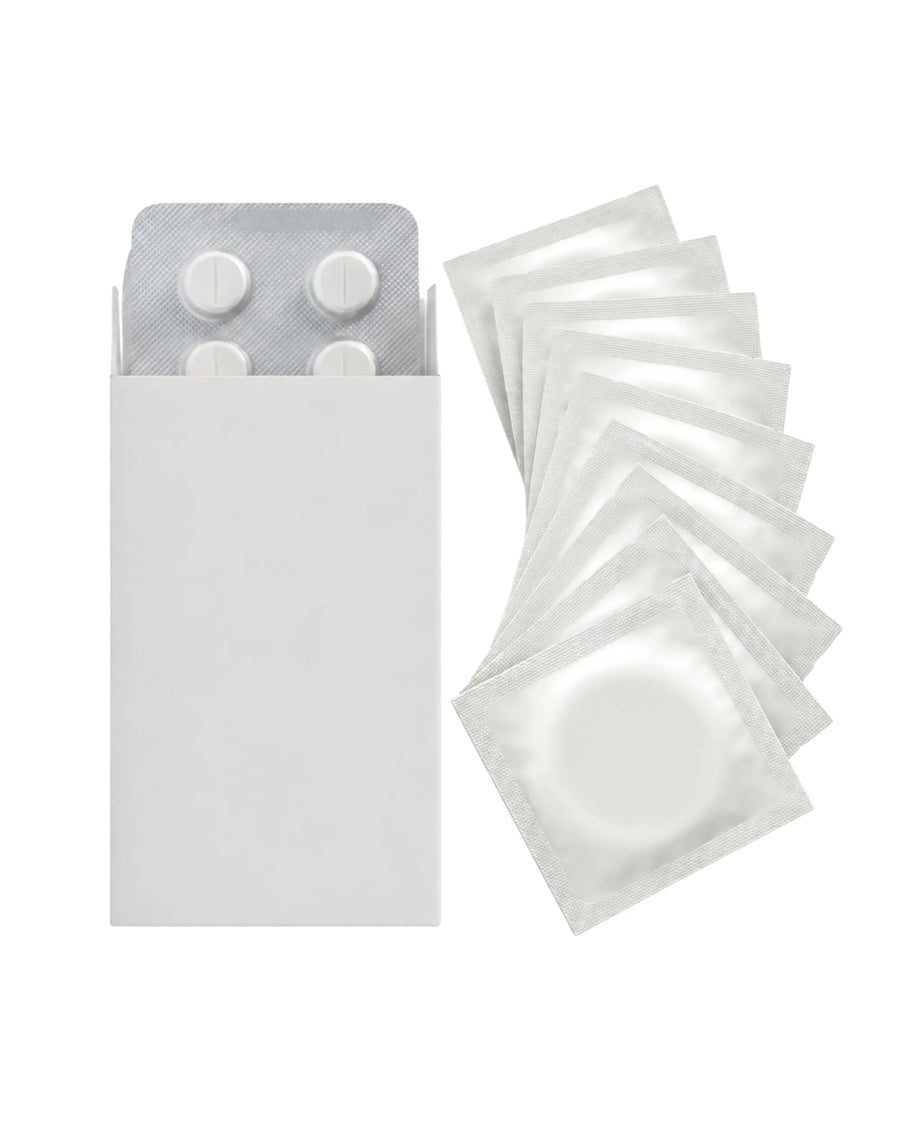

In sexual health prevention, there are moments when something shifts fundamentally. The pill was one. PrEP was one. And for a few years now, antibiotic post-exposure prophylaxis has been in the room, a method that gets talked about far more in queer communities than in doctors' offices.
There's a reason for that: it's one of the few prevention methods developed with queer people from the start instead of translated for them. What that means in practice, what the studies show and who it's an option for: read on.
First things first: PEP is not always PEP
The term PEP stands for post-exposure prophylaxis, and it gets used for two different things, which regularly causes confusion.
HIV PEP is the emergency option. After a risk contact, you take HIV medication for four weeks to prevent an infection. It needs to start as soon as possible, ideally within 24 hours and no later than 72 hours. You'll find it at emergency departments and specialist HIV practices.
Antibiotic PEP is something else. This is about bacterial STIs: chlamydia, syphilis and gonorrhoea. You take a single dose of an antibiotic after sex, ideally within 24 hours and no later than 72 hours. That's the method this article is about.
Why this is particularly relevant for queer people
The research was done with you, not around you
This is the point that often gets lost in the medical debate. All three major studies on antibiotic PEP, two from France and one from the US, were carried out with gay and bisexual men, other men who have sex with men and trans women.
In medicine, that's a rarity. Normally it works the other way round: something gets researched in a cis heterosexual majority and is then transferred, more or less well, to everyone else. Here it's reversed. The evidence exists precisely for these groups because they were at the centre from the beginning.
The burden is real, the reasons for it are structural
Bacterial STIs occur more frequently in MSM communities. That isn't because queer people have "riskier" sex. It comes down to a combination of factors: denser sexual networks in which infections travel faster, more frequent anal sex with easier transmission and standard care that rarely tests rectal or pharyngeal sites of its own accord.
On top of that comes something no statistic captures well: if you've ever had to explain in an examination room why the standard questions don't fit, you're less likely to go back next time. A method you steer yourself fills exactly that gap.
Self-determination instead of an appointment
Antibiotic PEP sits at home with you. You decide after a situation whether you need it. No appointment, no explanation, no justification. For people who regularly experience friction in the healthcare system, that's more than a practical convenience.
What the numbers actually say
A closer look is worth it here, because the effect isn't equally strong for every pathogen.
- Chlamydia: a drop of roughly 70 to 88% depending on the study
- Syphilis: a drop of roughly 73 to 87%
- Gonorrhoea: considerably weaker, halved in one study and with no measurable effect in another
There's a reason for the difference with gonorrhoea: a substantial share of the gonococci in circulation is already resistant to the antibiotic used. Anyone using antibiotic PEP and assuming gonorrhoea is taken care of is mistaken. If in doubt, talk to your partners about it.
Who is it an option for?
Most of all for people with increased exposure, which is exactly where the evidence is strongest. In practice that means MSM and trans women, often with a bacterial STI in the past twelve months.
And always in conversation with a doctor. Antibiotic PEP is prescription-only, and there are interactions and contraindications to clarify beforehand. You can find out more about this and other prevention options at Plan D, online and discreet, with no waiting room appointment and no pressure to explain yourself.
What antibiotic PEP doesn't replace
It works against three bacterial STIs. For everything else, you need other tools:
- Regular testing. Usually every three to six months, at every site where sex happens. If in doubt, that goes for your partners too. A self-test from home works with Reality Check.
- HIV PrEP. Two completely different tools for two different problems.
- Vaccinations. HPV, hepatitis A and B, and depending on the situation mpox as well.
- Condoms. They cover what antibiotic PEP doesn't.
The real gamechanger
Antibiotic PEP is not a free pass and not a miracle pill. But it is an effective addition to the toolkit, and its evidence is strongest exactly where it's needed. The real gamechanger may lie less in the tablet itself than in what it signals: queer sexual health is a research field in its own right, not an afterthought. Whether the method fits you is best worked out in conversation with doctors who know your reality.