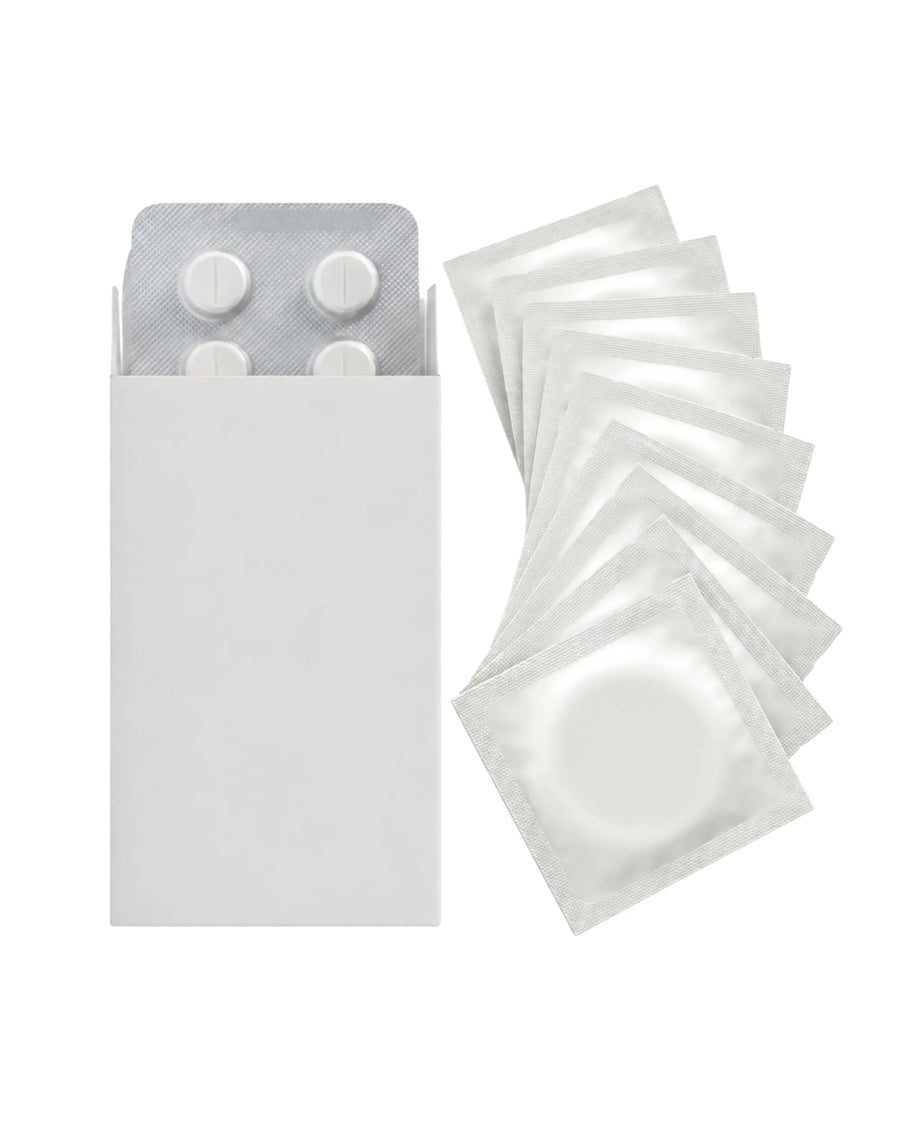
The theory is quick to explain: after sex you take a single dose and significantly lower your risk of certain bacterial STIs. Sounds simple.
Everyday life often looks different. It's four in the morning, you're not at home, the tablet is in the kitchen drawer and you're wondering whether it's even worth it at this point. These are exactly the situations this is about.
A quick note first: not all PEP is the same
Because the term is used for two different things, here's the quick distinction.
HIV PEP is the emergency. After a risk contact you take HIV medication for four weeks. The places to go are emergency rooms and specialist HIV practices.
Antibiotic PEP targets bacterial STIs, namely chlamydia, syphilis and gonorrhoea. A single dose after sex. That's what this text is about.
And one more note up front: what's right for you personally is settled in a medical assessment. Everything here is meant as orientation and doesn't replace the instructions you get with your prescription.
The time window
72 hours is the upper limit. 24 hours is the goal.
The sooner after the contact, the better it works. The studies use a window of up to 72 hours, but the effectiveness is highest at the start of that window.
In practice that means: if you have the choice between "right now" and "tomorrow morning in peace", take it right now.
And what if 60 hours have already passed since the contact? Then it's still worth it. Not optimal, but better than not at all.
How to take it
Stay upright. Don't swallow it lying down, and don't lie down for at least 30 minutes afterwards. The reason is very concrete: if a tablet from this drug group gets stuck in the oesophagus, it can irritate the lining. That's one of the most common reasons for discomfort after taking it.
Plenty of water. A full glass, not the last bit from the bottle next to the bed.
Not on a completely empty stomach if you get nauseous easily. A small snack is fine. But pay attention to the next point.
Distance from dairy and minerals. Calcium, magnesium, iron and zinc bind the active ingredient in the gut and noticeably reduce absorption. So that means milk, cheese and yoghurt, plus magnesium supplements, iron tablets, zinc tablets, multivitamins and heartburn remedies. Rule of thumb: two to three hours' distance in both directions.
A piece of toast or a banana are no problem. A latte macchiato straight afterwards is.
The situations where it gets complicated
Several contacts in one night
A night with several partners is still one occasion, not three. It's not about counting per contact, but about taking it once within the time window. More isn't better and only increases the side effects.
Several nights in a row
This calls for a conversation with a doctor. There's a sensible upper limit for how often you take it within a short period, and that depends on your situation. If you notice that you're taking it very regularly, that's a good reason to talk through the overall strategy rather than simply carrying on.
Alcohol in the mix
Alcohol doesn't make the dose ineffective. The bigger risk is a different one: you simply forget it or fall asleep before you think of it.
Vomiting shortly afterwards
If you vomit within the first one to two hours, absorption was probably incomplete. That's a situation for a quick check with a doctor, not one you solve yourself by taking another dose.
You're not at home
The most common reason for a missed time window is logistics, not forgetfulness. If you regularly stay over somewhere while out, you should keep a dose in your backpack, your jacket pocket or your wash bag. Dry, dark and below 35°C.
What it can't do
This is the part that gets missed most often.
Antibiotic PEP works against certain bacterial STIs. It doesn't protect against HIV, against hepatitis B or C, against herpes, against HPV or against trichomonas.
Concretely that means:
HIV protection stays its own topic. PrEP, condoms or effective treatment in the case of a known infection are completely unaffected by this.
Condoms aren't a contradiction. Different layers of protection complement each other, they don't replace each other.
Testing stays necessary. A prophylaxis lowers risk, it doesn't create certainty. Regular tests, for example with Reality Check, remain part of it.
Even among the bacterial pathogens, the protective effect isn't equally strong across the board. Against gonorrhoea it comes out noticeably weaker in the data than against chlamydia and syphilis, because a significant share of circulating gonococci are already resistant.
Side effects and everyday consequences
Sun. Your skin's sensitivity to light goes up. In summer, on holiday or on a sunbed that means: take sun protection seriously and avoid long spells of midday sun. Sunburn sets in faster than you're used to.
Stomach and gut. Nausea, a feeling of fullness or soft stool can occur. Usually mild, usually temporary.
Gut flora. Every antibiotic dose also attacks useful bacteria. With occasional use that's manageable, with frequent use many people notice it. A fibre-rich diet, fermented foods or targeted support like Gut Feeling can make sense here.
In people with a vagina, yeast infections can occur more often, because the balance of the vaginal flora gets disturbed.
The question of resistance
Let's be honest: the broad use of antibiotics for prevention isn't uncontested among experts. The concern is that pathogens become less susceptible, and not only the ones the prophylaxis is aimed at.
That's why this isn't a remedy for everyone and not one for every occasion. It's an option for people with increased exposure, embedded in regular testing and medical support. Anyone who uses it that way is acting responsibly. Anyone who pops it out of habit isn't.
The most common mistakes at a glance
Too late. Letting the window lapse because "tomorrow will do too".
Swallowed lying down. And then not connecting the irritation with taking it.
Washed down with a milky coffee. Effect reduced without noticing.
Taken twice. On the principle of better safe than sorry. It isn't.
Understood as a replacement for testing. The most expensive thinking error of all.
Didn't have it on you. The classic.
If you want to check this for yourself
Whether antibiotic PEP suits your situation depends on your exposure, your testing routine and your medical history. It's prescription-only, and there are interactions and contraindications that should be clarified beforehand.
With our Plan D, we look at different kinds of prevention and you start with a medical questionnaire that our partner doctors review. Online and discreet, without a waiting-room appointment and without pressure to explain yourself.
Preparation beats improvisation
Most problems don't come from a lack of knowledge, but from timing and logistics. Having a dose on you, taking it upright and with enough water and keeping the distance from milk and minerals in mind: that's already the biggest part.
The rest is honest context. It's one building block, not the whole strategy.