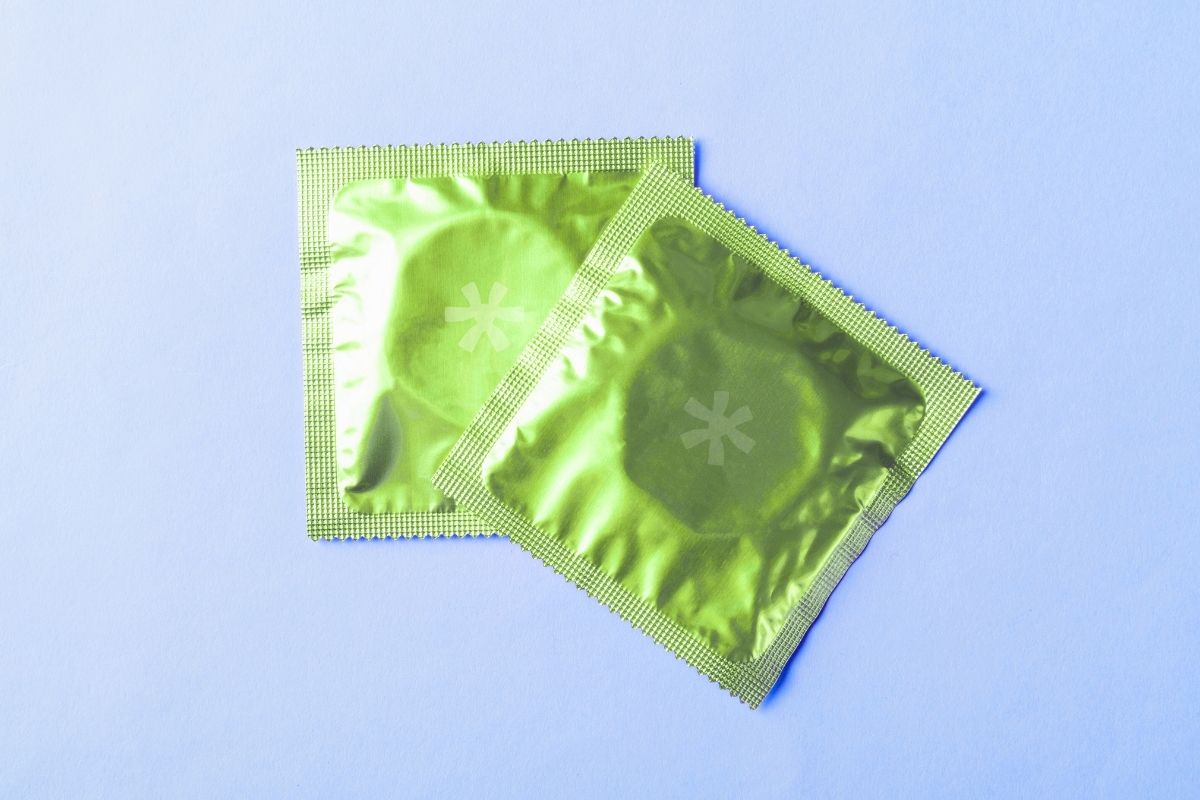
11 Reasons Why People Don't Use Condoms
Condoms are among the safest methods to prevent sexually transmitted infections (STIs) and unwanted pregnancies. Nevertheless, many people don't use them, whether for practical, emotional, or social reasons. What reasons play a role in these personal decisions?
"It doesn't feel as good": The comfort myth
A widespread reason for not using condoms is the concern that they reduce pleasure. Some find the extra layer disruptive or feel less intensity. Especially if a condom doesn't fit optimally or is made of an unfamiliar material, it can be perceived as uncomfortable.
However, there is now a variety of condom types with different thicknesses, materials, and textures. Ultra-thin or latex-free condoms can preserve a natural feeling, while lubricated models offer additional comfort. Those who have difficulties with condoms might find a suitable solution by trying different variants.
"I'm healthy": Underestimating STI risks
Many people don't use condoms because they assume that they and their partner are healthy. Especially in committed relationships or after a negative STI test, there is often a feeling that protection is no longer necessary. However, it is often overlooked that some infections are asymptomatic and only detectable after weeks or months.
Regular testing is a good way to check one's sexual health. Those in a new relationship or with multiple partners can gain clarity through joint testing. This minimizes the risk, with or without a condom.
"I'm in a committed relationship": The trust factor
In a monogamous relationship, there is often a feeling that condoms are no longer necessary. Trust plays a major role here: many perceive condom use as a sign of distance or doubt in their partner. However, especially at the beginning of a new relationship, it can be advisable to get tested together before foregoing protection.
It is crucial to talk openly about the topic and clarify any uncertainties. An STI test can provide not only health but also emotional security. Couples who make joint decisions about safer sex often strengthen their communication and mutual trust.
"My partner doesn't want to use condoms": Peer pressure and relationship dynamics
Sometimes it's not one's own decision, but the influence of another person, that leads to the rejection of condoms. Especially in new or emotionally intense relationships, it can be difficult to set a clear boundary if the partner doesn't want to use condoms. This can be related to comfort, but also to notions of intimacy or trust.
Open communication about personal boundaries and needs helps here. Those who feel uncomfortable with a no to condoms can bring alternatives such as PrEP or regular STI tests into the discussion. It is important that both sides feel comfortable and that the decision is based on mutual respect.

"It's not spontaneous enough": The pleasure-killer myth
Condom use is sometimes perceived as disruptive because it interrupts the flow of the moment. Especially in spontaneous or passionate situations, searching for and putting on a condom can be seen as a pleasure-killer. This reinforces the impression that sex without a condom is more natural or exciting.
But safer sex doesn't have to be complicated. Those who have condoms readily available and actively integrate them into foreplay can incorporate their use playfully. A joint application or a sensual touch with lubricant can make the experience more pleasant and minimize the feeling of disruption.
"I'm allergic to latex": The material question
Some people avoid condoms because they have a latex allergy. This can manifest as itching, skin irritation, or discomfort, leading to condoms being perceived as uncomfortable. This affects an estimated 2% of the general population.
Fortunately, there are now numerous latex-free alternatives made from materials such as polyurethane or polyisoprene. These are just as safe and often offer an even more natural feeling. Those who have problems with latex should try different models to find a suitable solution.
"They're too expensive": The cost factor
For some people, condoms are a financial barrier, especially if they are used regularly. High-quality brand products can seem more expensive compared to other contraceptive methods, which leads some to use them only occasionally or not at all.
However, there are many ways to get condoms for free or at low cost. Many counseling centers, health authorities, or non-profit organizations distribute condoms free of charge. In addition, some health insurance companies offer subsidies or reimbursements for contraceptives.
"I use another birth control method": The protection fallacy
Hormonal contraceptives such as the pill or IUD offer reliable protection against pregnancy. Some people rely on them and therefore forgo condoms. However, these methods do not protect against sexually transmitted infections.
Especially with changing partners, it makes sense to use condoms in addition. Those in a committed relationship who choose another contraceptive method should have themselves and their partner tested regularly to be on the safe side.

"I don't have one": The convenience trap
Opportunity makes love: but often without a condom because none is readily available. Unplanned situations or spontaneous encounters are one of the most common reasons why people forgo protection.
It can help to get into the habit of always carrying a condom: whether in a wallet, jacket pocket, or next to the bed. Those who are prepared can enjoy spontaneous moments without compromising safety.
"I rely on coitus interruptus": The uncertainty factor
Some people rely on the "pull-out method" to prevent pregnancy. However, this method is extremely unreliable, as sperm can already be present in pre-ejaculate. In addition, it does not protect against STIs.
Those who opt for hormone-free contraception can inform themselves about alternatives such as diaphragms or copper IUDs. In combination with regular tests and open conversations about sexual health, protection can be optimized.
"I'm on PrEP, so I don't need condoms": Protection with limitations
Pre-exposure prophylaxis (PrEP) has proven to be an extremely effective method of preventing HIV infection. People who take PrEP regularly have a greatly reduced risk of contracting HIV, which for many is the main reason they previously used condoms. Consequently, some choose to forgo condoms, as they feel sufficiently protected by PrEP.
However, PrEP only protects against HIV, not against other sexually transmitted infections such as syphilis or chlamydia. Those who have regularly changing sexual partners may therefore still be at an increased risk for STIs. Therefore, PrEP use is combined with regular STI tests. Nevertheless, depending on the situation, condom use can be very sensible. This ensures comprehensive protection.
💡 Summary
There are many different reasons why people don't use condoms, and they are often more understandable than one might initially think. It is important not to judge these reasons, but to talk about them and point out alternatives.
Those who feel uncomfortable with condoms or do not wish to use them for specific reasons can find solutions that combine protection and comfort. Open communication, regular STI tests, and an informed approach to sexual health are key to a safe and fulfilling sexuality.


Reality Check
Vertrauen ist gut,
ein Test ist [besser]
Selbst bei der großen Liebe: Ein Test ist keine
Misstrauenserklärung, sondern Selfcare
für alle Beteiligten.
Erfahre mehr über STI-Testing
Jetzt informieren