When we think about the immune system, we usually have vitamins, zinc, or the classic ginger shot in mind. But the true control center of your defenses sits somewhere else, one level lower.
Did you know that around 70 to 80 percent of all immune cells are located in your gut? Your digestive tract is therefore far more than just a processing station for food. It is the largest immune organ in your body and your most important bodyguard against pathogens. And as with any bodyguard, the rule applies: it only works reliably when you take good care of it.
The Microbiome: A Trillion-Strong Army
Living in your gut is the so-called microbiome, a vast community of trillions of bacteria, fungi, and viruses. You could think of it as a highly complex ecosystem in which every species plays a role.
Beneficial bacteria help break down nutrients, produce vitamins, and train your immune system. As long as they outnumber the rest, they keep harmful germs in check. When this balance tips, the immune system suddenly finds itself fighting on all fronts.
What can disrupt this balance is varied: antibiotics, a one-sided diet, chronic stress, or too little sleep all leave their mark on the microbiome. We often only notice this when we start feeling run-down, get sick more frequently, or suddenly react to things that never bothered us before.
Your microbiome is not a static entity. It changes daily, depending on what you eat, how you sleep, and how stressed you are.
How the Gut Communicates with Your Immune System
The gut wall acts as a barrier between the outside world and your interior. Its surface, if spread out, would be roughly the size of a tennis court. Across this vast area, your immune cells patrol like border guards. They must decide in milliseconds what is harmless and what needs to be fought, for example, whether a particular protein belongs to spinach or to a pathogen.
A healthy gut ensures that these border guards are vigilant but not hypersensitive. If the gut flora is disrupted, silent, chronic inflammation can develop, putting the immune system under permanent stress. The immune system then remains on constant high alert, so to speak, without any concrete threat present. The result: you feel run-down, get sick more easily, or become prone to allergies and intolerances.
It is also interesting that this communication system works in both directions. The gut not only sends signals to the immune system, it also receives them. Inflammatory processes elsewhere in the body can therefore also make themselves felt in the digestive system.
3 Ways to Strengthen Your Gut Immune System
You don't need to go through elaborate treatment programs to do something good for your gut. Targeted adjustments to everyday habits are often enough.
Feed the good ones. Dietary fiber is the favorite food of your beneficial gut bacteria. Whole grain products, legumes, onions, garlic, and plenty of vegetables keep your defense army in good spirits. Most people in Germany eat significantly less fiber than recommended. 30 grams per day is the guideline, most people manage about half that.
Score points with live cultures. Fermented foods such as sauerkraut, kimchi, kefir, or natural yogurt deliver live bacterial cultures that can directly support your microbiome. One important note: heat kills the beneficial cultures. Sauerkraut from a jar is therefore clearly preferable to heated kraut from a can.
Take stress management seriously. The gut and brain are directly connected via the vagus nerve, which is why chronic stress quite literally hits you in the stomach and indirectly weakens your immune defenses. Those who sleep regularly, exercise, and build in conscious breaks are doing their gut, not just their head, a favor.
What About Dietary Supplements?
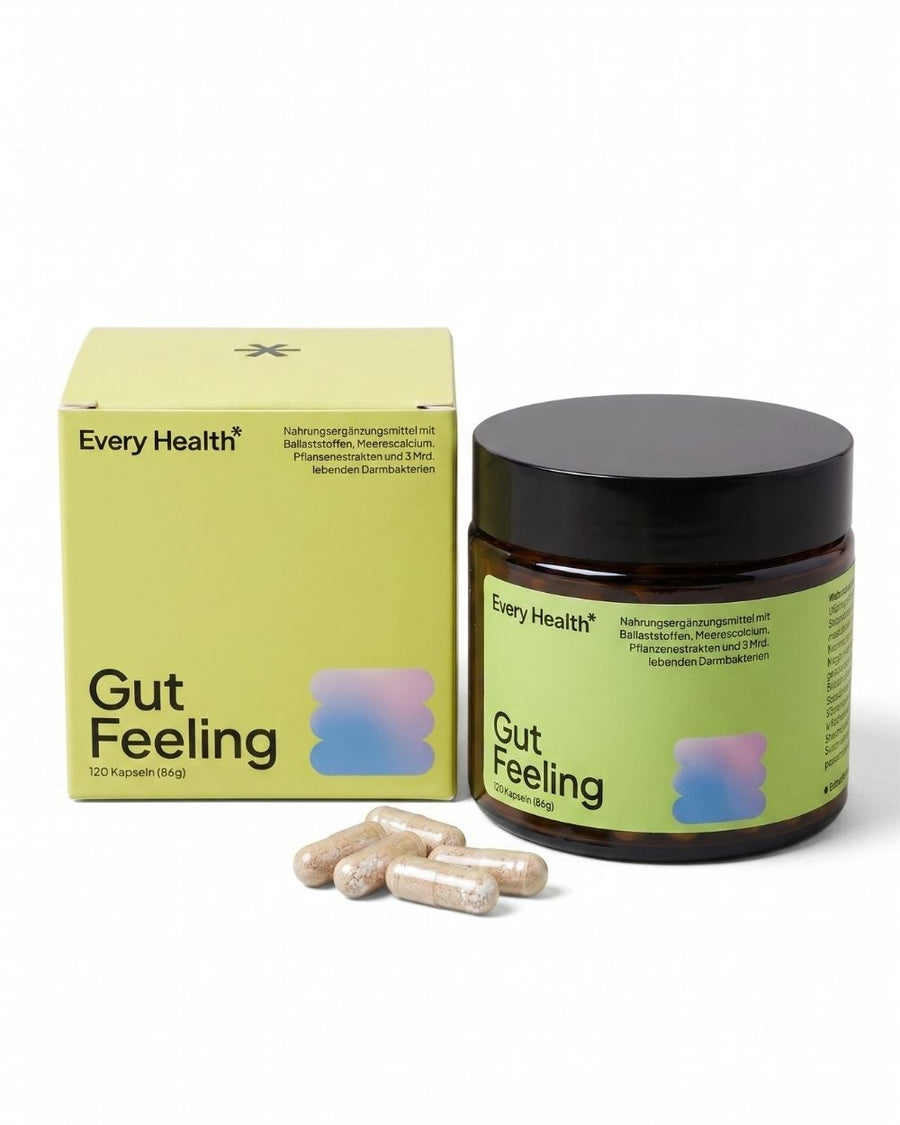
Gut treatment products and capsules are a huge market, and the research around them is constantly evolving. Not every bacterial strain has the same effect, and depending on the situation, different products may make sense.
It is important to understand supplements for what they are: a complement. Someone who swallows a capsule but at the same time sleeps little, barely exercises, and eats few dietary fibers will get little out of it. The best results come when supplementation and a gut-friendly lifestyle go hand in hand.
Those who have recently completed a course of antibiotics, suffer from chronic digestive problems, or want to rebuild their immune system after a demanding period may benefit particularly from targeted supplementation, ideally in consultation with a medical professional who can assess the right option for the individual situation.
Holistically Healthy: Everything Is Connected
At Every Health, we never look at health in isolation. Your gut influences your skin, your mental clarity, and your resilience against infections. If you often feel under the weather, looking at your digestion is frequently more worthwhile than reaching for yet another pack of vitamin C.
Just as we take care of our sexual health, we should also listen to our gut feeling. A strong immune system begins with a well-nourished gut, and your gut will be glad when you start seeing it for what it is: not as a bothersome digestive organ, but as an active part of your wellbeing.