
Things are going well, you end up in bed and a few minutes later it is over for you, a good deal sooner than you wanted. Plenty of people with a penis know evenings like that and they say nothing about whether you are good in bed or whether your relationship works.
Premature ejaculation is one of the most common sexual health subjects there is, while only a small share of the men affected ever seek help (comparison of the EAU, AUA and ISSM guidelines, Diagnostics 2024). Part of that is the shame society still attaches to the subject, even though there is nothing embarrassing about it. For a lot of men something can change once it is clear what sits behind it.
What counts as premature ejaculation?
The clinical terms are premature ejaculation or ejaculatio praecox, meaning ejaculation that arrives earlier than wanted. The international specialist societies work with three criteria that have to come together: ejaculation happens very quickly, you can barely delay it on almost every occasion and the situation causes distress for you or your partner (ISSM definition, Serefoglu et al., Sexual Medicine 2014).
On the time limit the guidelines part company. For men who have known this since their first sexual experiences, the International Society for Sexual Medicine, or ISSM, gives about one minute after penetration. The American society talks about roughly two minutes and the European guideline gives no figure in minutes at all (guideline comparison, Diagnostics 2024). If you used to have more time and things have been noticeably quicker for a while, a different marker applies, namely about three minutes or less (ISSM definition, Serefoglu et al., Sexual Medicine 2014).
The third criterion is what matters most here, because treatment becomes worthwhile when the situation genuinely weighs on you. Those figures in minutes come from studies of vaginal intercourse, which is why the guidelines themselves point out that the thresholds do not transfer neatly to oral or anal sex (guideline comparison, Diagnostics 2024). The difficulty itself exists whoever you have sex with. What counts is how it feels to you.
How long does sex last on average?
In a study of 500 couples across five countries, the time between penetration and ejaculation came to a median of about 5.4 minutes, across a range from just over half a minute to 44 minutes (Waldinger et al., Journal of Sexual Medicine 2005). That range tells you a great deal about how much falls inside the normal span.
Timing also shifts across a lifetime, since in the same study the figure sat at around 6.5 minutes among 18 to 30 year olds and at about 4.3 minutes among those over 51 (Waldinger et al., Journal of Sexual Medicine 2005). If your benchmark has come from porn or from conversations among friends, it is probably set a good deal higher than reality.
How many men ejaculate sooner than they want to?
Ask men in general whether they sometimes come more quickly than they would like and large surveys land at roughly 20 to 30 per cent, which counts in everyone who recognises the experience at all (guideline comparison, Diagnostics 2024). The figure shrinks once all three criteria have to apply together, meaning a very short duration plus absent control plus distress on almost every occasion. For men who have known this since their first sexual experiences, the ISSM puts the share at no more than about 4 per cent (ISSM guideline, Althof et al., Sexual Medicine 2014). Added to them are the men for whom things have changed over the course of their lives.
A large share of those reporting quick ejaculation in surveys belong instead to two groups that the guidelines set out as needing no treatment. One group is quicker on some occasions and slower on others, which belongs to the normal span, say after a longer break or with someone new. In the other, the duration sits in the usual range even though it feels too fast to the man himself (guideline comparison, Diagnostics 2024). For both of those, a good explanation in conversation is usually enough.
What sits behind premature ejaculation
If you have known this since your first sexual experiences, the main factor is how you are built. The messengers in the brain that govern the ejaculatory reflex are involved, serotonin above all. Twin studies suggest that inheritance accounts for a substantial share of it (Majzoub et al., Asian Journal of Andrology 2019). That is a reassuring finding, because it means technique, experience and self-control have little to do with it, while training is still worthwhile, since the reflex may fire quickly even though you can learn to read the arousal that comes before it.
A change that is new is worth looking at properly, because something treatable often sits behind it. The guidelines point mainly to erection problems, chronic inflammation of the prostate, known as prostatitis, an overactive thyroid, along with poor sleep, stress, anxiety and relationship conflict (guideline comparison, Diagnostics 2024).
Plenty of men have both at once, erection problems and premature ejaculation. For many of them a loop of worry and self-monitoring sits behind that: being unsure whether the erection will hold makes for quicker ejaculation, which leaves the next occasion more tense from the start. Performance anxiety usually does not cause the first episode, though it does keep the pattern going (Majzoub et al., Asian Journal of Andrology 2019). That is one more reason to raise erection problems early at a practice.
Where there are pointers towards an overactive thyroid, such as a racing heart, weight loss on a normal diet and inner restlessness, a blood test clarifies it. Pain in the perineum, on passing urine or on ejaculation belongs at a urology practice, since prostatitis responds well to treatment.
Exercises that train your control
The classic techniques from sex therapy all work on the same spot, namely your awareness just before the point at which the reflex takes over. With the stop-start technique you should pause at high arousal until the tension eases a little and then carry on, ideally on your own through masturbation at first. With the squeeze technique you or your partner should squeeze the glans just below the tip as soon as it gets close. Sensate focus works through taking turns to touch without a destination, leaving out genital contact at first, so that attention moves from performance back to sensation.
All the major guidelines regard behavioural techniques like these, alongside counselling from a sex therapist, as worthwhile. The European and the American guideline add that combining a technique with medical treatment improves the outcome compared with treatment on its own (guideline comparison, Diagnostics 2024).
What matters with all of these is the expectation you bring: they are designed as training across weeks, through which you get to know the line between arousal and reflex more precisely. For guidance along the way, a sex therapy practice is the place to go. The professional societies for sexual medicine and sex therapy can point you to one.
What else helps in bed
Condoms. A condom dampens the sensation somewhat and plenty of men last longer with one, while it also protects against sexually transmitted infections. Extra thick condoms are also available, which dampen the sensation further.
Change the order of things. When sex starts with hands, mouths or toys and penetration arrives later, the excitement spreads across a longer stretch. That way less rides on how long penetration itself lasts for either of you, because you have already done plenty together by then.
Build in pauses. Stopping briefly, changing position, carrying on again: that is the stop-start technique in everyday form and for many couples the easiest way in.
Come beforehand. Masturbating a few hours earlier often means taking longer during sex afterwards. It works differently from person to person, so it is worth a try rather than a rule.
Keep an eye on alcohol and substances. Both alter arousal and control in either direction, which makes a few sober evenings a useful comparison.
What treatments are available at a practice
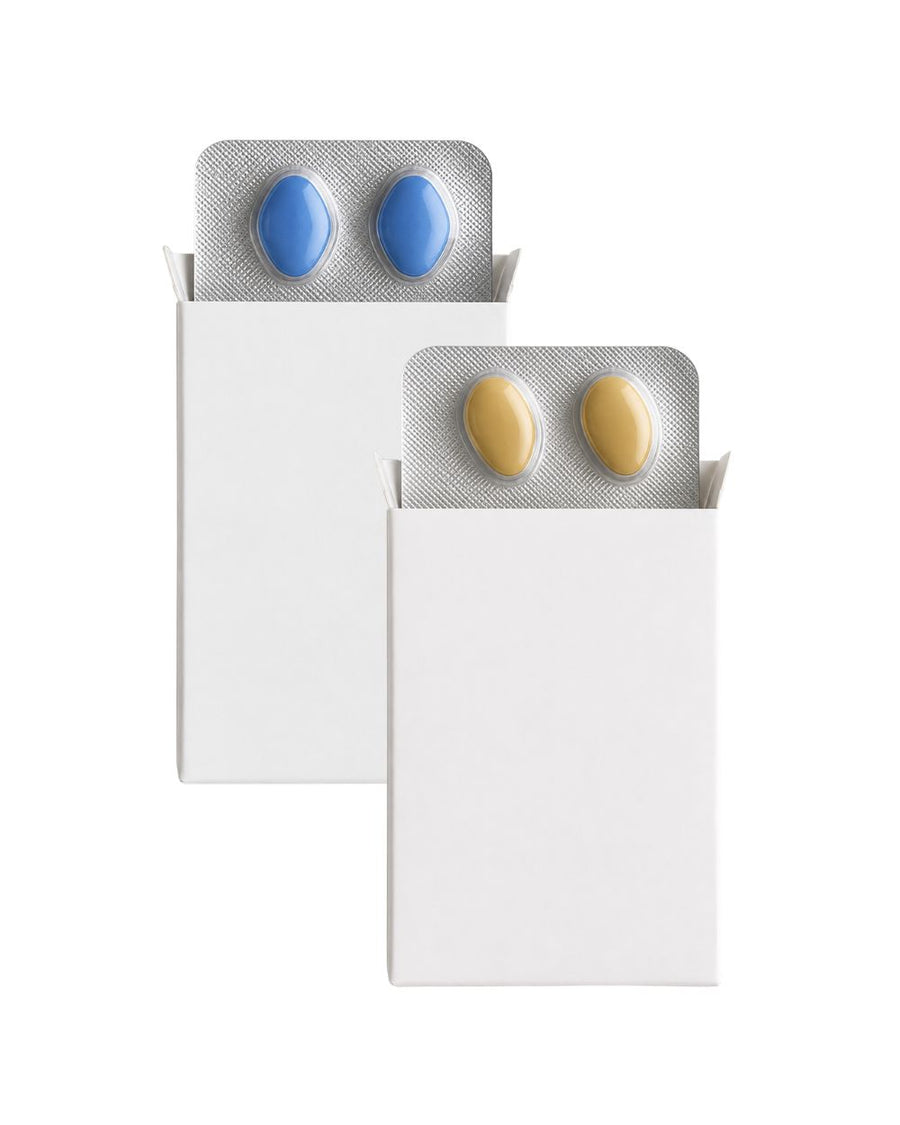
Three routes count as effective in the guidelines. The first is a prescription tablet taken as needed, a few hours before sex. The second is a topical anaesthetic, as a spray or cream, which temporarily reduces the sensitivity of the glans. The third covers medicines taken daily that carry no specific licence for this complaint. Doctors are still able to prescribe them while talking it through with you in detail, because the licence covers a different use (EAU guideline 2024 and AUA/SMSNA guideline 2022, cited in the guideline comparison, Diagnostics 2024).
What suits you depends mainly on how long the difficulty has been going on and whether erection problems come with it. How often you have sex matters too, since a tablet taken as needed fits infrequent sex differently from a daily treatment. At Every Health you can sort that out through an online consultation, from your medical history through the prescription to delivery at home. Anyone who would rather talk it through face to face is in good hands at a urology or sexual medicine practice.
What to talk about with your partner
All the major guidelines recommend involving your partner, since the subject arises between two people and tends to resolve more easily between two people. It is not a requirement, so the success of treatment does not hinge on it (guideline comparison, Diagnostics 2024).
What usually helps is a conversation outside the bedroom in which you say what you are experiencing and what you would like. It often emerges that duration matters less to the other person than assumed, while the tension and the avoidance around it are very much noticed.
When you should get it medically assessed
The following warrant investigation:
- Timing that has shifted noticeably across weeks or months
- Erection problems or difficulty maintaining an erection
- Pain in the perineum, on passing urine or on ejaculation
- Burning on passing urine, discharge or skin changes on the penis
- A racing heart, weight loss or inner restlessness as a possible thyroid pointer
- Distress that carries over into your mood, your self-image or your relationship
With burning, discharge or pain, a check for sexually transmitted infections is worth adding. With Reality Check you can test yourself at home for chlamydia, gonorrhoea, syphilis, HIV and hepatitis C and send the samples off to the laboratory, with the result ready roughly 24 hours after your sample arrives. With symptoms you should also see a urology practice, since other causes are possible too.
Good sex has no minimum duration
Premature ejaculation is among the most common sexual complaints and among the most treatable, because exercises help where it has always been quick and a concrete cause often sits behind a recent change. The route there runs through a conversation, at a practice or online, with the first step tending to be the most uncomfortable one.
If you live comfortably with your timing and your partner is happy with it too, there is nothing here you need to change, even where a figure from a study suggests otherwise. Distress is what gets treated and you are the only one who knows yours.